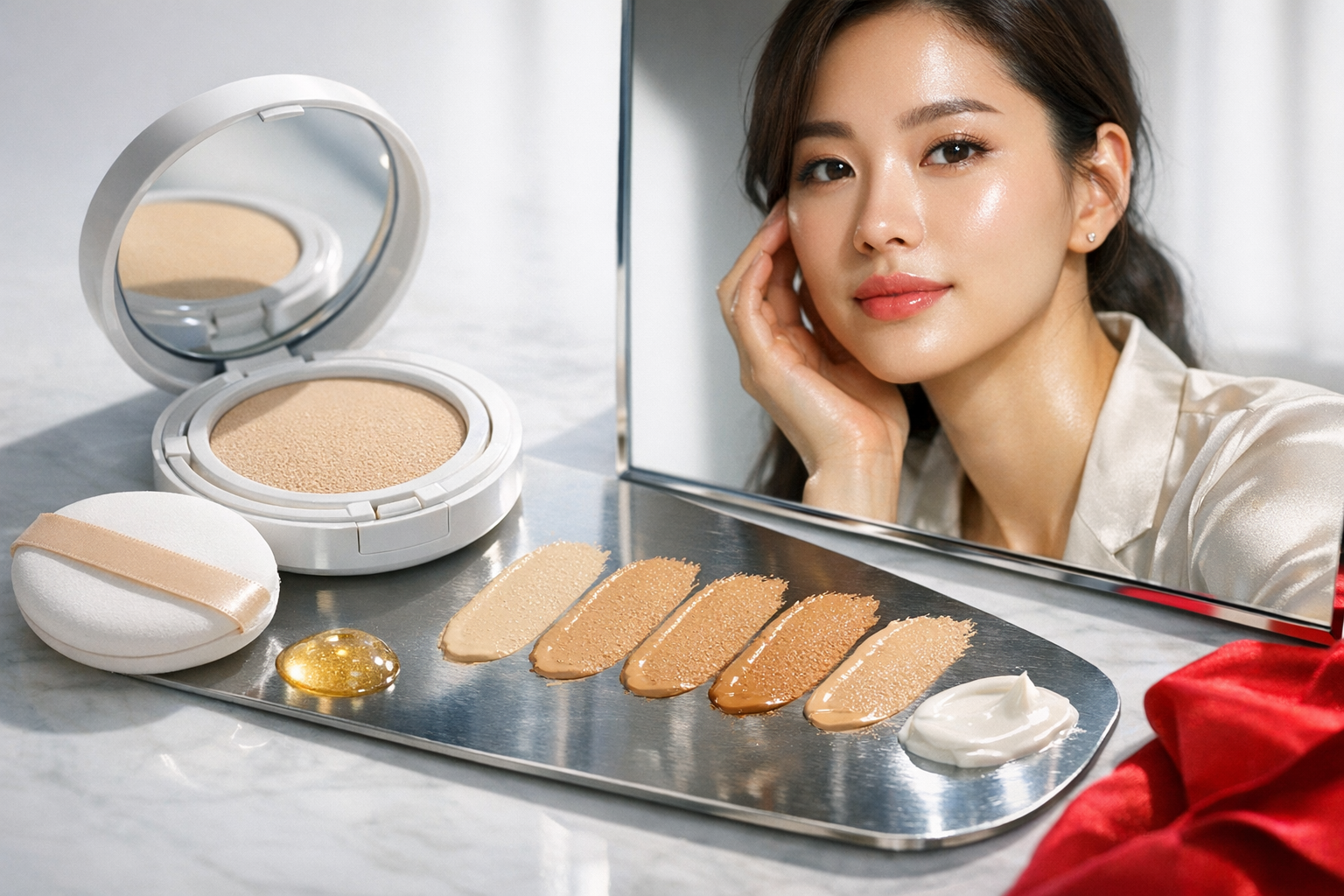
Key takeaways
- Start with undertone and depth before comparing finish, coverage, and skincare claims.
- Many Korean cushion ranges run lighter and narrower than Western foundation lines, so swatches and retailer photos matter.
- If you cannot test in person, choose flexible formulas and check refill systems, oxidation, SPF use, and return policies.
Shopping for base makeup online can feel risky, especially when you cannot swatch in person. This Korean cushion foundation shade guide breaks down how to choose a shade, finish, and formula with fewer surprises, using practical criteria rather than brand hype.
Why cushion foundation shopping can be tricky
Korean cushion foundations are popular because they are portable, quick to apply, and often designed to create a smooth, even complexion. Many also combine makeup with skincare-style ingredients and sun protection, which makes them appealing for daily use. For online shoppers, though, the biggest challenge is shade selection.
Compared with many Western complexion ranges, Korean base products have often been released in a narrower span of shades, especially in older or more traditional lines. That does not mean every product is extremely light, but it does mean you should not assume a familiar number or name will match what you already wear in another brand. A shade called 21, 23, or beige may look very different depending on the formula and brand.
Another issue is finish. Cushion foundations are often associated with a dewy, radiant look, but that category now includes soft-matte, semi-matte, glowy, natural, and high-coverage formulas. A shade that seems workable in one finish may look different in another because shine, coverage level, and oxidation can all affect how the color reads on skin.
Start with undertone, not just shade depth
The most useful first step is identifying your undertone. Depth tells you how light or deep your skin is, but undertone explains whether a foundation looks natural once applied. In broad terms, undertones are usually described as cool, warm, neutral, or olive. Cool undertones tend to lean pink or rosy, warm undertones lean golden or yellow, neutral undertones sit between the two, and olive undertones can have a muted green or gray cast.
Many Korean cushion formulas historically lean neutral-to-yellow rather than strongly pink. That can work well for some shoppers, but it can also make a product look too golden or slightly dull if your skin is distinctly cool. If you already know that pink-based foundations suit you best, pay close attention to official swatches, customer photos, and retailer descriptions that mention rosy, cool, or ivory-pink tones.
If you are unsure of your undertone, compare your best-matching current foundation in daylight against your jawline and neck. Then write down how the brand describes it. When shopping online, look for similar words rather than relying only on a shade number. Terms such as ivory, vanilla, sand, beige, neutral, golden, or rose can offer clues, even though naming is not standardized across brands.
For many shoppers, the safest online choice is a neutral shade that is close to the neck rather than the center of the face. This is especially true if you want a natural everyday result. Cushion foundation is often applied in light layers, so a slightly flexible match usually looks better than a shade that is technically close in depth but wrong in undertone.
How Korean cushion shade systems usually work
One reason shoppers search for a Korean cushion foundation shade guide is confusion around numbering. In many Korean base lines, shade numbers such as 13, 17, 21, 23, 25, and sometimes 27 or deeper are used as rough depth markers. Generally, lower numbers indicate lighter shades and higher numbers indicate deeper shades. However, these numbers are not universal standards. Shade 21 in one brand may be lighter, darker, warmer, or more muted than shade 21 in another.
As a broad rule, 13 is often very fair, 17 is fair-light, 21 is light, 23 is light-medium, and 25 or above moves deeper. But this is only a starting point. Some brands release only a few shades, while others now offer expanded ranges or separate lines for different markets. Always treat the number as a category, not a guarantee.
It also helps to understand that cushion formulas are frequently designed for brightening and evening the complexion rather than creating a heavy mask. Because of that, some shades can initially appear slightly lighter on application and settle after a few minutes. If a formula is known to oxidize, it may deepen over time. Reading multiple reviews can help you spot whether a product tends to stay true to color or shift during wear.
Choose finish and coverage based on your skin type
Shade match matters, but finish determines whether you will actually enjoy wearing the product. If you have dry or dehydrated skin, radiant or glow cushions are often the easiest place to start. They usually make texture look softer and can be more forgiving if your skin has flaky patches. The trade-off is that very luminous formulas may need powder in the T-zone or touch-ups later in the day.
If you have oily or combination skin, a semi-matte or matte cushion may hold up better and reduce the need for frequent blotting. These formulas are often best for humid weather, long workdays, or anyone who dislikes a shiny finish. The downside is that matte products can emphasize dry areas if your skin prep is not balanced.
Coverage also changes the shopping decision. Sheer to light cushions are best for people who want a quick, natural look and are comfortable with some skin showing through. Medium-coverage formulas are often the most versatile for daily wear. Full-coverage cushions can be useful for redness, uneven tone, or events, but they are less forgiving if the shade is slightly off. If you are buying without testing, a buildable medium formula is often the safest choice.
What to check before you buy online
Product photos alone are not enough. Start with official shade charts, then compare them with retailer images and customer swatches taken in natural light. Look for swatches on multiple skin tones, not just on the arm of one model. Jawline photos are especially helpful because they show how the shade blends into the neck.
Next, read the formula description carefully. Check whether the cushion is marketed as glow, natural, matte, long-wear, blurring, or high coverage. Also note whether it includes a refill, because refill systems can improve value if you end up liking the product. Some cushions are sold as a compact plus refill, while others are sold as a single compact only.
Pay attention to SPF claims, but do not treat cushion foundation as your only sun protection. Most people do not apply enough makeup to reach the labeled SPF performance. It is better to use sunscreen underneath and think of the cushion as an added layer rather than a complete substitute.
Finally, review the store’s return policy and shipping conditions. Online beauty shopping is easier when the retailer provides clear shade descriptions, ingredient lists, and customer service support. If your skin is sensitive, scan for common fragrance or alcohol concerns and patch test when the product arrives.
Who each cushion style is best for
A dewy cushion is best for dry skin, dull skin, and shoppers who want the classic glass-skin effect. A natural-finish cushion is best for beginners, office wear, and people who want skin to look polished without obvious shine. A matte or long-wear cushion is best for oily skin, summer weather, and long days outside the house.
Buildable coverage cushions are best for uncertain shade matching because they allow a lighter first layer. Higher-coverage cushions are best for people who prioritize evening out discoloration quickly. Compact-and-refill sets are best for regular users who already know they like the formula, while single compacts can be a lower-risk first purchase if you are still experimenting.
If you are between shades, the better choice depends on the formula. In a sheer or radiant cushion, going slightly deeper can look more natural than going too light. In a high-coverage formula, a too-deep shade may be harder to correct. When in doubt, compare your neck, chest, and daily sunscreen tone so your final result looks balanced in daylight.
How this guide was edited
Last editorial update: August 2026. This guide is written for readers comparing Korean beauty options online, not for diagnosing or treating skin conditions.
For Korean cushion foundation shade guide, the shortlist is judged by practical routine fit first. The goal is to help you decide what belongs in your routine and what to skip.
Selection criteria
- Shade range and oxidation risk
- Coverage level
- Finish in daylight
- Touch-up practicality
How to choose by finish
| Reader need | Practical buying note |
|---|---|
| Dry skin | Look for a flexible, satin or hydrating finish and prep with moisturizer. |
| Oily skin | Choose semi-matte formulas and expect midday touch-ups. |
| Online shade matching | Check undertone, oxidation notes, and return terms before buying. |
What to check before buying
- Check shade photos from multiple retailers when possible.
- Read recent buyer notes about texture, finish, and shipping conditions.
- Prefer stores with clear return, shipping, and authenticity policies.
FAQ
How do I match a Korean cushion foundation online if I already use another foundation?
Start with your current best match and note both the depth and undertone. Then compare that information with official swatches, retailer descriptions, and customer photos. Do not rely on shade numbers alone, because numbering systems vary across brands.
Are Korean cushion foundations only for very fair skin?
No, but shade availability varies widely. Some lines still have limited ranges, while others are broader than older shoppers may expect. The key is to check the actual swatch range before buying rather than assuming every cushion category is the same.
Should I choose a matte or dewy cushion?
Choose based on skin type, climate, and preferred look. Dewy formulas are usually best for dry or dehydrated skin and a fresh finish, while matte formulas are often better for oily skin, humidity, or longer wear.
Can cushion foundation replace sunscreen?
It should not be your only sunscreen step. Even if the compact includes SPF, most people apply too little foundation to get the full labeled protection. Use a separate sunscreen underneath for more reliable coverage.
Sources
This article is based on stable general knowledge about Korean cushion foundation categories, common shade numbering conventions in K-beauty, standard makeup color-matching principles, and typical online shopping considerations such as undertone, finish, coverage, SPF use, ingredient awareness, and refill packaging. It also reflects widely recognized differences between radiant, natural, and matte cushion formulas and common best practices for comparing official swatches with retailer and customer images.
This article may contain affiliate links. If you buy through them, we may earn a commission at no extra cost to you.