Key takeaways
- Dry skin usually benefits most from hydrating, low-irritation toners with humectants and barrier-supporting ingredients.
- The best Korean toner for dry skin depends on texture preference, sensitivity level, and how the toner fits into the rest of your routine.
- Ingredient labels, fragrance level, and layering compatibility matter more than trends or packaging when choosing a toner.
Finding the best Korean toner for dry skin can feel confusing because K-beauty uses the word “toner” differently from many older Western formulas. In Korean skincare, toners are often designed to hydrate, soften, and prep the skin rather than strip it. That makes them especially relevant for dry skin, but only if you know what to look for.
If you are shopping without a dermatologist’s recommendation or a trusted product shortlist, the safest approach is to compare formulas by ingredient type, texture, and skin tolerance. Dry skin is not all the same: some people want a light first layer under makeup, while others need a richer, more cushioning toner that helps reduce tightness after cleansing.
What dry skin needs from a Korean toner
Dry skin typically lacks enough water, oil, or both. A good toner cannot replace a moisturizer, but it can improve comfort and help the rest of your routine work better. The main job of a toner for dry skin is to add hydration immediately after cleansing and reduce that stretched, uncomfortable feeling.
In practical terms, that usually means looking for humectants such as glycerin, hyaluronic acid, beta-glucan, panthenol, or trehalose. These ingredients help attract and hold water near the skin. Many Korean toners also include soothing ingredients like centella asiatica, allantoin, mugwort, or heartleaf, which can be helpful if dryness comes with visible sensitivity.
Barrier support matters too. Dry skin often does better with formulas that work well alongside ceramides, fatty ingredients, amino acids, or fermented ingredients that support a healthier skin feel over time. Even when these are not the main ingredients in a toner, they can make a formula feel more nourishing and less fleeting.
What dry skin usually does not need is a strongly astringent toner packed with high amounts of denatured alcohol or harsh exfoliating acids used too often. Some acids can be useful in a routine, especially if flaky buildup is a problem, but a daily toner for dry skin should generally prioritize hydration first.
How Korean toners differ by texture and use
One reason Korean toners are popular is the wide range of textures. Some are watery and absorb in seconds, while others are slightly viscous and feel closer to a lightweight essence. Neither is automatically better. The right choice depends on how dry your skin feels and how many layers you like to apply.
Watery toners are often best for people who dislike heaviness, live in humid climates, or want to use the “layering” approach sometimes associated with K-beauty. Applying one to three thin layers can give dry skin more flexibility than using a single thick product. This can also help makeup sit better during the day.
More cushiony or essence-like toners are often best for people with persistent tightness, seasonal dryness, or a weakened skin barrier. These formulas may feel more comforting with just one application and can be easier for beginners who do not want a multi-layer routine.
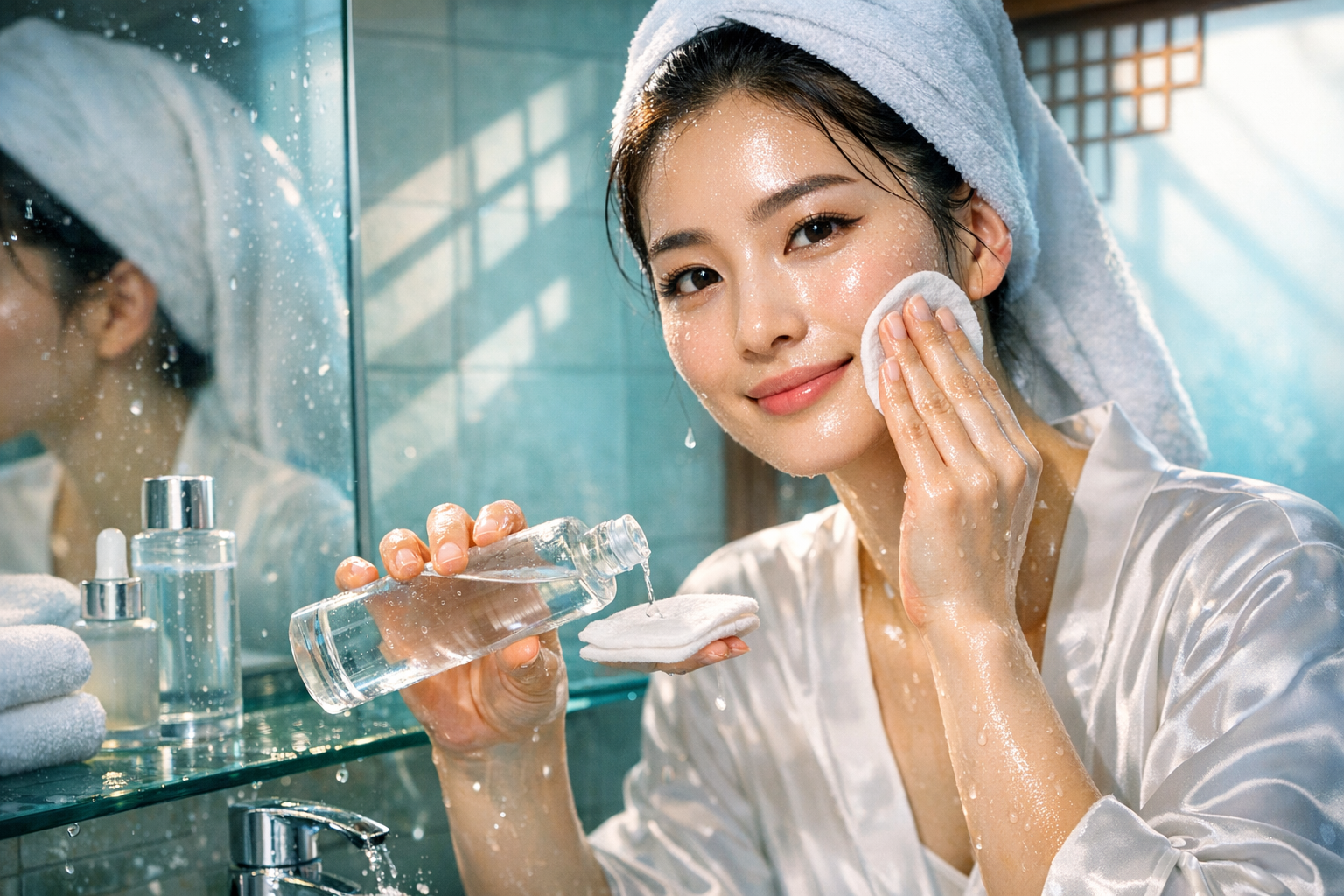
There is also a practical difference between toners meant mainly for hydration and toner pads marketed for convenience or gentle exfoliation. If your skin is dry and easily irritated, a liquid toner applied with clean hands is often the gentlest starting point. Cotton pads can increase friction, and exfoliating pads may be too much if your barrier is already struggling.
Ingredients and formula types worth considering
When comparing products, ingredient categories are more useful than marketing claims. Humectant-focused toners are a strong default choice for most dry skin types. Glycerin is especially dependable because it hydrates well and appears in many effective formulas. Hyaluronic acid can also help, though it tends to work best when followed by a moisturizer that helps seal hydration in.
For skin that feels both dry and reactive, soothing toners can be a better fit than highly active ones. Ingredients like centella asiatica, panthenol, beta-glucan, and allantoin are commonly associated with comfort and reduced irritation. Mugwort and heartleaf are also common in Korean skincare, especially in formulas aimed at calming stressed skin.
For very dry or mature skin, look for toners that feel more nourishing rather than purely watery. Rice extract, fermented ingredients, amino acids, and milky toner textures can be appealing here. These formulas often help the skin feel softer and less rough, though individual tolerance varies and fermented ingredients are not universally ideal for every sensitive skin type.
If your dry skin also has rough patches or dullness, a mild exfoliating toner may have a place in your routine, but it should not be your only toner. Lactic acid and polyhydroxy acids are often gentler options than stronger acid blends. The key is moderation. Over-exfoliating dry skin can quickly make flaking, redness, and stinging worse.
Fragrance is another important consideration. Many people enjoy scented skincare, but dry skin that is also sensitive often does better with low-fragrance or fragrance-free formulas. Essential oils can also be irritating for some users, so it is worth checking the ingredient list if your skin reacts easily.
How to choose the best option for your routine
The best Korean toner for dry skin is the one you will use consistently and that works with your cleanser, serum, and moisturizer. Start by deciding whether you want simple hydration, soothing support, or a richer prep step that almost behaves like a light essence. This narrows the field much faster than chasing viral recommendations.
If you use a strong cleanser, retinoid, or acne treatment, a plain hydrating toner is often the smartest match. In that context, your toner should reduce dryness rather than add more activity. If your routine is already minimal, you may prefer a more nourishing toner that adds comfort and helps your moisturizer spread more easily.
Climate matters as well. In dry or cold weather, many people prefer slightly thicker toners or layering multiple hydrating steps. In hot and humid weather, a lighter toner may feel more comfortable while still preventing dehydration after cleansing. Seasonal rotation can make sense if your skin changes significantly through the year.
Packaging and application style also affect the experience. Pump or flip-top bottles can be easier for generous use, while very small openings help prevent waste. Applying toner with your palms is usually more economical than soaking cotton pads, and it tends to be kinder to dry skin.
Finally, patch testing is worth the effort, especially if your skin is sensitive, eczema-prone, or currently irritated. Even gentle ingredients can cause problems for some people. A balanced buying decision should focus on formula logic, not just popularity.
Common shopping mistakes to avoid
A frequent mistake is assuming all Korean toners are automatically gentle. Many are hydration-focused, but there are also exfoliating, clarifying, and treatment-oriented formulas. Dry skin shoppers should read beyond the front label and check whether the toner is meant for daily moisture, oil control, or resurfacing.
Another mistake is expecting toner alone to solve chronic dryness. Toner works best as part of a system: mild cleanser, hydrating toner, optional serum, moisturizer, and daytime sunscreen. If your skin still feels dry after toner, the missing step is often a better moisturizer or less aggressive cleansing.
It is also easy to overbuy based on texture trends. Milky toners, fermented toners, and toner pads all have their place, but the best choice depends on your own skin behavior. Beginners usually do well with a straightforward hydrating toner that has a short, readable ingredient list and a low risk of irritation.
How this guide was edited
Last editorial update: June 2026. This guide is written for readers comparing Korean beauty options online, not for diagnosing or treating skin conditions.
For best Korean toner for dry skin, the shortlist is judged by practical routine fit first. The goal is to help you decide what belongs in your routine and what to skip.
Selection criteria
- Hydration and comfort rather than dramatic treatment claims
- Layering potential
- Fit for sensitive-feeling or dry skin
- Whether the formula solves a clear routine problem
How to choose by skin type
| Reader need | Practical buying note |
|---|---|
| Dry or dehydrated skin | Prioritize comfort, layering, and formulas that do not leave skin tight. |
| Oily or combination skin | Look for lighter textures and avoid adding too many rich layers at once. |
| Sensitive-feeling skin | Patch test first and be cautious with fragrance, acids, and strong actives. |
What to avoid before buying
- Avoid choosing a product only because it is viral; match it to your skin type and current routine.
- Do not add several new products in the same week. Introduce one product at a time so you can notice irritation.
- Be careful with medical-sounding claims. Cosmetics can support the look and feel of skin, but they are not treatments.
FAQ
Can dry skin use exfoliating Korean toners?
Yes, but usually not as the main daily toner. Dry skin can benefit from occasional gentle exfoliation if flakes and rough texture are an issue, but overuse can weaken the barrier. Many people do better with a separate exfoliating product used sparingly and a hydrating toner for everyday use.
Are milky toners better than watery toners for dry skin?
Not always, but they can be a good fit for people who want more comfort in one step. Watery toners are often better for layering and for those who dislike residue. Milky toners may feel more nourishing, especially in colder weather or when the skin barrier feels compromised.
Should I apply Korean toner with a cotton pad or my hands?
For dry skin, hands are often the better choice because they reduce friction and product waste. Cotton pads can still be useful if you prefer a light wipe or need to remove leftover cleanser, but pressing toner in with your palms is usually gentler.
Can I skip toner if I already use a serum and moisturizer?
Yes. Toner is helpful, not mandatory. If your skin is comfortable and hydrated without it, you do not need to force the step. Toner is most useful when cleansing leaves your skin tight or when you want an extra layer of hydration that is lighter than a cream.
Sources
This article is based on stable general skincare knowledge about dry skin care, Korean skincare routines, common toner formats in K-beauty, and widely recognized ingredient categories such as humectants, soothing agents, barrier-supporting ingredients, and mild exfoliants. It reflects editorial analysis of how toners are typically positioned in Korean skincare and how shoppers can evaluate formulas without relying on unverified product claims.
This article may contain affiliate links. If you buy through them, we may earn a commission at no extra cost to you.